My Sleep Tracker Turned Rest into a Performance Review
My Sleep Tracker Turned Rest into a Performance Review
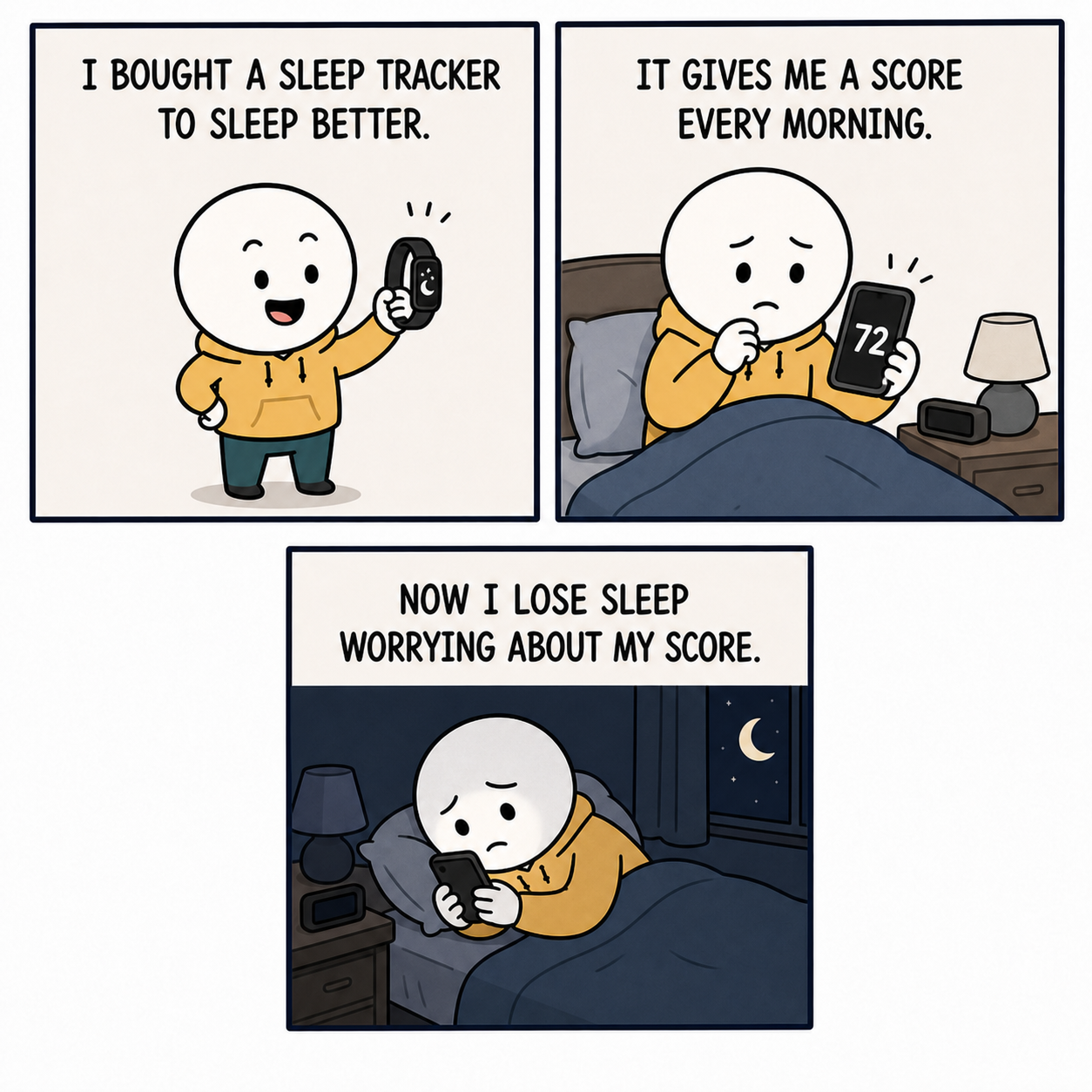
I bought a sleep tracker because I wanted to sleep better.
Every morning it gave me a number. A high score felt like approval. A low score felt like I had failed an exam I took while unconscious.
At first, the data was interesting. Then it became a verdict.
I started checking the app before checking how I actually felt. On mornings when I woke up refreshed but received a mediocre score, I became tired retroactively.
Eventually, I lay awake thinking about the number I might see the next day.
Measurement Changes the Experience
Tracking can make invisible patterns visible. It can also make an ordinary experience feel like a competition.
Sleep is especially vulnerable because it cannot be forced directly. The harder I tried to produce a perfect night, the more alert I became. Rest turned into another task with a dashboard.
The tracker had not changed. My relationship with the data had.
A Score Is an Estimate, Not a Biography
A wearable sees movement, heart rate, timing, and other signals. It does not see the full day around them.
It does not know that a late conversation mattered more than an ideal bedtime. It does not know that I woke briefly but felt fine. It cannot fully explain stress, mood, illness, or the strange dreams caused by eating too late.
The score is a model of sleep, not sleep itself.
That distinction sounds obvious, but it is easy to forget when a confident number appears in a polished circle.
Check the Body Before the Dashboard
I changed the order of my morning routine.
Before opening the app, I ask:
- Do I feel rested?
- Is my attention clear?
- Is my body asking for a slower morning?
Only then do I look at the data.
This prevents the score from writing the story before I have noticed my own experience.
I also stopped reacting to single nights. One unusual score is noise. A repeated pattern across weeks may be useful information.
Use Data to Ask Better Questions
The tracker is most helpful when it creates curiosity instead of judgment.
Rather than asking, “Why did I fail?” I can ask:
- What changed this week?
- Do late meals affect how I feel?
- Does a consistent wake time help?
- Am I using the tracker to learn, or only to worry?
Questions leave room for context. Scores often pretend context is unnecessary.
Rest Is Not a Performance
I still wear the tracker. I like seeing long-term patterns, and the gentle bedtime reminder is occasionally useful.
But I no longer treat a green number as proof that I slept well or a red number as permission to feel terrible.
The purpose of tracking sleep is to support rest. If the measurement makes rest harder, the system needs adjustment—even when the device is working exactly as designed.
Some mornings, the best sleep metric is still the simplest one:
I woke up, took a breath, and noticed how I felt.